
Blog
Posted: April 7, 2025
Troubleshooting Common Grill Tank Issues
Keep your barbecue on track and safe.
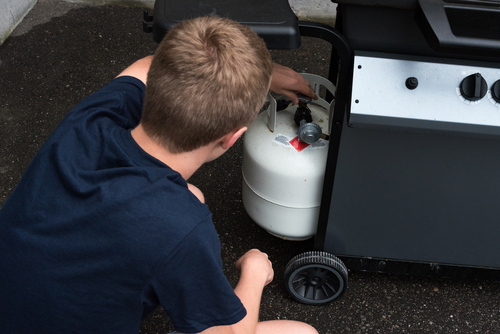 Grilling is a way of life in Victoria or any other nearby Texas community, but dealing with grill tank problems can put a damper on your plans. Whether your grill won’t light or your tank is hissing, understanding how to troubleshoot common propane grill tank issues is essential for a seamless cookout experience. At Symank Energy, we’re here to help with expert tips and services to keep you grilling like a pro.
Safety and Requalification Guidelines for Propane Grill Tanks
Before addressing issues, it’s important to ensure you’re following safety protocols. One crucial step for safe propane cylinder use is staying up to date with requalification guidelines. According to U.S. Department of Transportation (DOT) regulations, portable propane tanks must be inspected and prequalified:
- 12 years after the manufacture date, which is usually stamped on the tank’s neck or handle.
- Then, every 5 years after the initial inspection.
Using expired or damaged propane cylinders is unsafe and could lead to operational issues or leaks. If your propane cylinder shows signs of dents, excessive corrosion, or leaks, it’s time to replace or requalify it at an authorized DOT facility.
Whenever you attach a new grill tank, we recommend you do this DIY leak test:
- Mix a 50/50 solution of water and dish soap in a spray bottle.
- Spray it onto the tank’s valve, hose, and regulator.
- Open the cylinder valve and watch for bubbles. If bubbles form, close the valve, tighten connections, and test again. Persistent bubbles indicate a leak, and the cylinder should be discarded safely.
My Grill Won’t Light
If your grill refuses to start, the issue may lie with the tank or grill itself. Here’s how to diagnose and fix it:
- Check for burner blockages. Spiders and debris often clog burners. Clean them with a toothpick or brush.
- Inspect the ignitor. Replace batteries if needed or repair/replace broken mechanisms.
- Ensure propane flow. Verify that the propane cylinder valve is open and the tank isn’t empty.
How Much Propane Is Left in My Cylinder?
Running out of propane mid-barbecue is frustrating. If your grill doesn’t have a built-in gauge, try these methods:
- Weigh it: Use a home scale. Subtract the Tare Weight (TW) from the total weight and divide the result by the Water Capacity (WC) to determine how full it is. You can find both the TW and the WC on the neck of the cylinder.
- Hot water test: Pour hot water over the tank and feel for the temperature change to locate the fill line.
- External gauge: Invest in an external tank gauge for instant readings.
My Tank Is Hissing
If you hear a hissing sound, don’t panic. This usually occurs when the tank’s internal pressure is too high, activating the pressure relief valve.
What to do: Turn off the grill immediately. The valve will automatically close once the pressure normalizes.
Refuel Your Propane Cylinder with Symank Energy
When it’s time to refill your propane cylinder, Symank Energy has you covered. Our self-serve propane refill stations in Cuero, TX, and Madisonville, TX, offer convenience and reliability so you can get back to grilling in no time. These stations are open during standard office hours to accommodate your needs.
Next time your grill tank needs a refill, visit Symank Energy at our Cuero or Madisonville locations. Contact us if you have any questions.